
Lease vs Buy Car: How to Compare the Total Cost
Compare what you'll actually pay over the same period, not just the monthly payment.
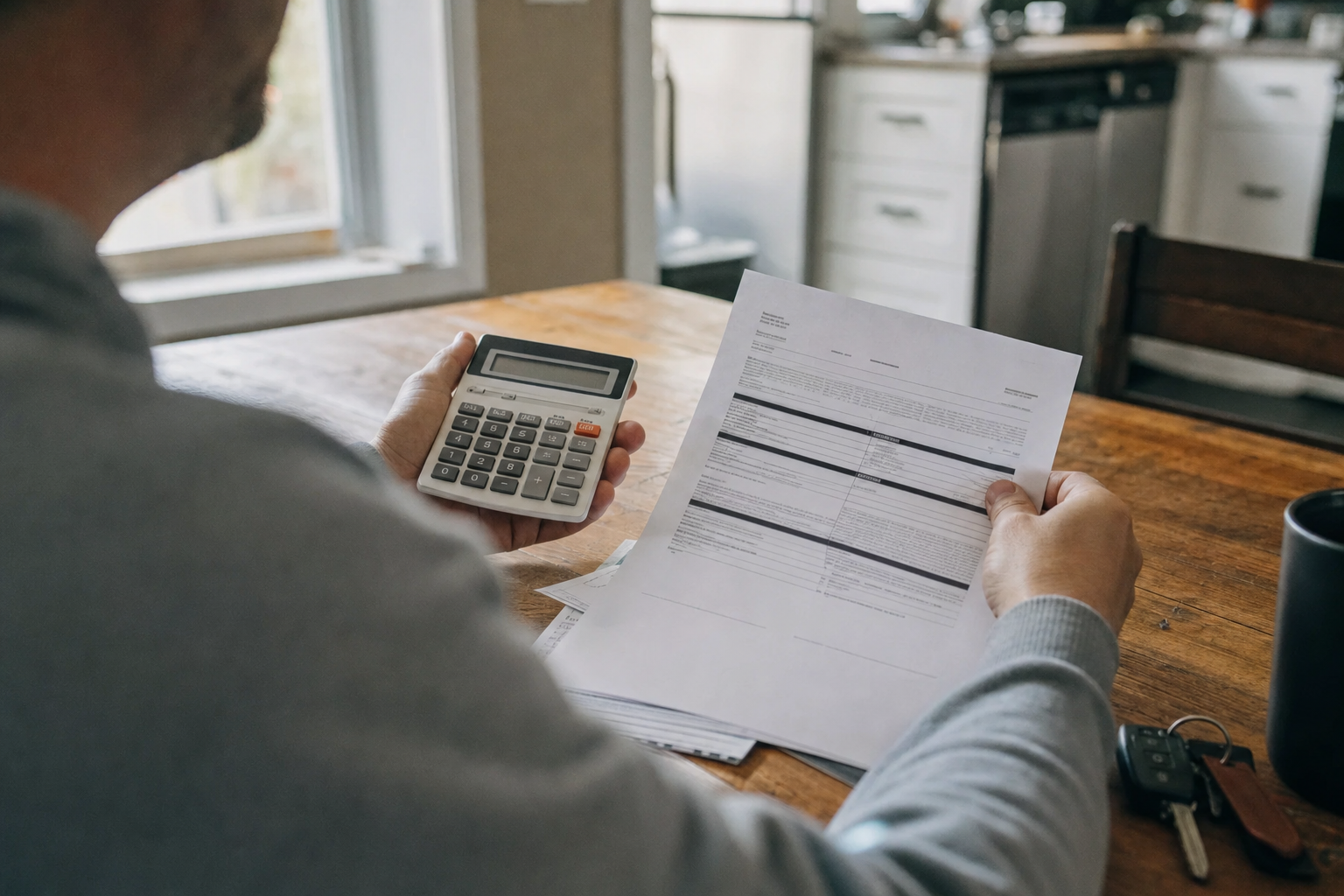
Choosing between a lease and a purchase means comparing total cash paid over the same ownership period, not just the advertised monthly payment.
A lease typically charges for the vehicle’s expected depreciation during the term, plus rent charges, taxes, and fees.
You return the vehicle at the end unless you exercise a purchase option.
A purchase loan covers the vehicle’s full price, plus interest and related costs.
Once the loan is repaid, you own the vehicle and any remaining equity.
The monthly payment alone doesn’t tell you which option costs less.
A lower lease payment often reflects paying for only part of the vehicle’s value, while a purchase payment generally amortizes the full price. Compare total cash paid minus what you have at the end.
What you’re actually paying for in each option
When you lease, your payments primarily cover the vehicle’s depreciation during the lease term and a rent charge set by the lessor.
You also pay taxes and registration, along with any fees specified in your lease contract.
Review your lease agreement for the complete list of charges, which may include acquisition fees, security deposits, and end-of-term fees.
When you buy with financing, your loan payments cover the vehicle’s purchase price plus interest.
You also pay taxes, registration, title, and any dealer or lender fees upfront or rolled into the loan.
Once the loan is paid off, you own the vehicle outright.
How to calculate total cost for a lease
Start with everything due at signing: down payment, first month’s payment, taxes, registration, acquisition fee, and any other upfront charges.
Add all scheduled monthly payments over the lease term.
Include insurance, routine maintenance, and any contractual charges specified in your lease agreement.
Subtract only refundable deposits or credits actually returned to you.
The result is your total cash paid for the lease period.
How to calculate total cost for a purchase
Add your down payment, all loan payments over the comparison period, taxes, registration, title, and any dealer or lender fees.
Include insurance, maintenance, and repairs you expect to pay during that period.
At the end of the comparison period, subtract the vehicle’s market value or trade-in value and adjust for any remaining loan balance.
If the loan is fully paid, the vehicle’s value is yours.
If a balance remains, subtract that balance from the vehicle’s value to find your net equity.
| Cost element | Lease | Purchase |
|---|---|---|
| Upfront payment | Due at signing (taxes, fees, first payment, deposit) | Down payment, taxes, fees, title |
| Monthly payment | Depreciation + rent charge + taxes | Principal + interest |
| End-of-term charges | Per lease contract | None (you own the vehicle) |
| Ownership equity | None unless you buy at lease end | Vehicle value minus remaining loan |
What happens at the end of the term
At lease end, you normally return the vehicle and settle any charges outlined in your lease contract.
Some lease agreements offer a purchase option at a predetermined price.
If you exercise it, you pay that price plus any applicable fees and taxes.
When you finish paying a purchase loan, you own the vehicle.
You can keep it, sell it, or trade it in, and any value above what you owe is yours.
When each option makes more sense
Leasing may fit your situation if you want a new vehicle regularly, prefer predictable payments, and don’t need ownership equity.
Buying generally becomes more attractive when you plan to keep the vehicle beyond the loan term, want to modify the vehicle, or want to build equity.
The Consumer Financial Protection Bureau notes that with a loan, the vehicle is yours once you finish paying, giving you continued use without further payments.
Your decision should reflect how long you’ll keep the vehicle, how much you’ll drive, whether you value ownership, and your total-cost comparison over the same period.
Before you decide, consider these questions:
- How many years do you plan to keep the vehicle?
- How many miles will you drive each year?
- Do you want to own the vehicle and build equity?
- What is the total cash paid for each option over the same period, minus what you have at the end?
- What upfront amount can you afford, and does a larger payment reduce your total cost or just lower the monthly payment?
- What charges will you owe at lease end, and are they included in your comparison?
Run the numbers for both options using the same vehicle, the same time period, and realistic assumptions about mileage, maintenance, and end-of-term value.
The option with the lower total cost after accounting for what you have at the end is the one that saves you money.
* Contract terms, fees, and vehicle values change frequently. Confirm current offers and consult the Consumer Financial Protection Bureau for official guidance.