
Usage-Based Car Insurance: How Telematics Programs Work
Learn how driving data can shape your auto insurance premium.
Usage-based car insurance connects your premium to how much or how you drive.
Insurers call this approach telematics insurance or UBI.
Instead of a separate type of coverage, it is generally a pricing method that uses technology to measure mileage, driving behavior, or both.
The insurer combines the collected information with its approved rating model and traditional factors to calculate, refine, or discount your policy premium.
What usage-based car insurance measures
Telematics programs typically track miles driven, driving time, and location.
Many also measure rapid acceleration, hard braking, hard cornering, and airbag deployment.
Some programs monitor phone use while the vehicle is moving.
The exact list depends on the insurer and the program design approved in your state.
The insurer uses this information to assess risk and adjust your premium or discount accordingly.
How telematics technology collects driving data
Insurers use one of several methods to gather telematics information.
A smartphone app is one available collection method.
You download the app, grant the required permissions, and the app records trips according to the insurer’s technology and program terms.
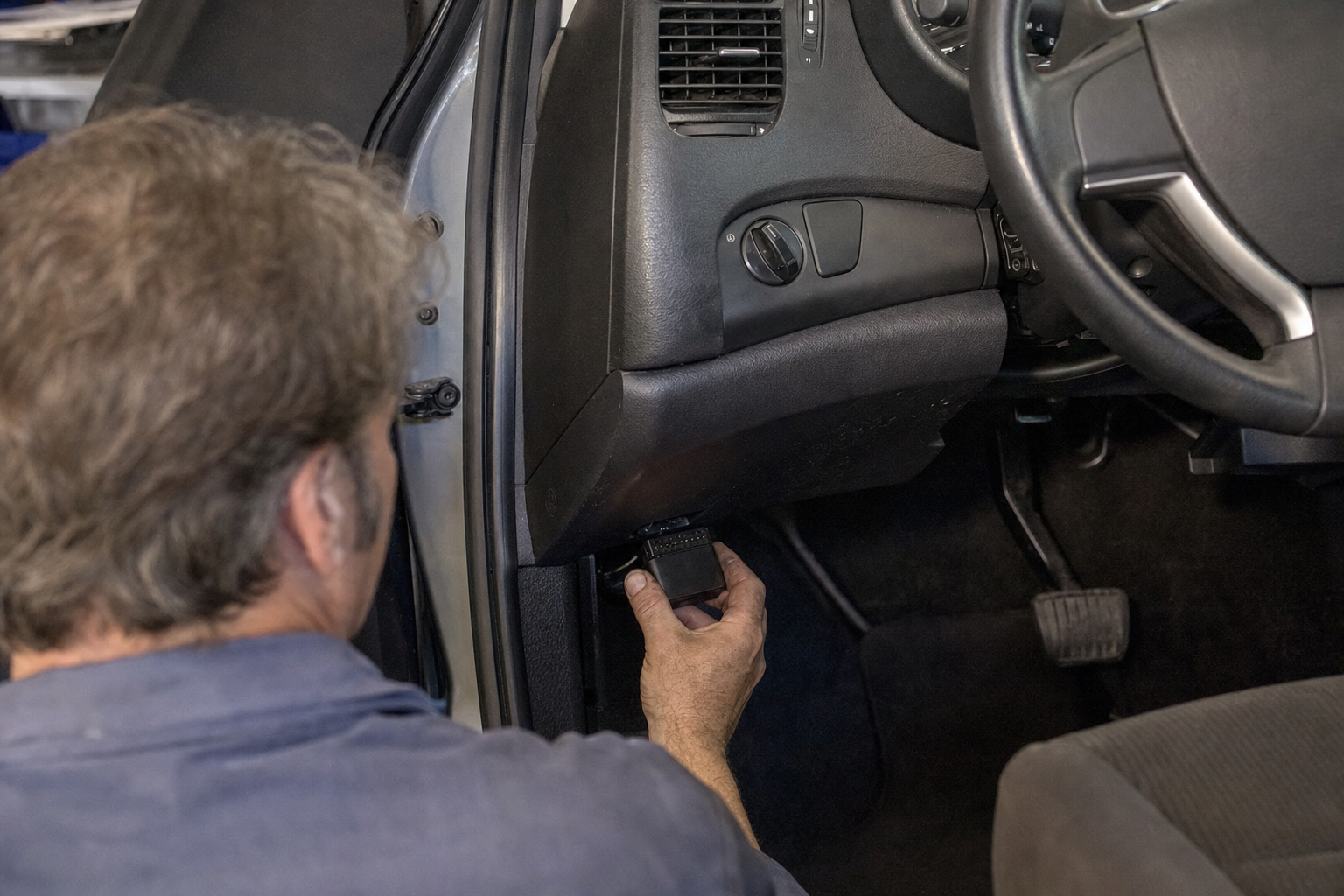
A plug-in device connects to the vehicle’s OBD port, usually located under the dashboard.
The device transmits data according to the insurer’s technology and program design.
Some newer vehicles have built-in telematics that communicate with the insurer when you enroll, depending on the program and vehicle.
Each method has trade-offs in convenience, accuracy, and privacy.
Pay-as-you-drive vs. pay-how-you-drive programs
Usage-based insurance falls into multiple models, with terminology and measured factors that vary by insurer and state.
Pay-as-you-drive programs typically focus on mileage.
Drivers who cover fewer miles may receive a lower premium, depending on the program.
Pay-how-you-drive programs may evaluate driving behaviors such as braking, acceleration, turns, and time of day.
Some programs may include speed, phone activity, or other factors.
Some programs combine both mileage and behavior in a single rating formula.
| Program type | Primary focus |
|---|---|
| Pay-as-you-drive | Miles driven |
| Pay-how-you-drive | Driving behavior (may include braking, acceleration, time, phone use, or other factors) |
| Hybrid | Mileage and behavior combined |
The model your insurer offers determines which factors matter most to your premium.
Who may benefit from a telematics program
In some programs, drivers with low annual mileage may see savings in pay-as-you-drive programs.
In some programs, drivers who primarily use the vehicle during daytime hours may receive a more favorable premium result if the program rewards lower-risk driving times.
In some programs, drivers who brake smoothly, accelerate gradually, and avoid hard cornering may receive favorable scores.
The potential benefit depends on the insurer’s rules, the state’s regulatory approval, and your actual driving pattern.
How the program treats measured driving data—including whether it affects a discount, base premium, or both—varies by insurer, program, and state.
Whether participation is optional or required depends on the insurer, policy, and program terms.
Privacy and accuracy considerations
Telematics programs raise privacy questions because they collect detailed information about when, where, and how you drive.
Review the insurer’s privacy notice to understand what data is collected, how long it is retained, and whether it is shared with third parties.
Location data can reveal patterns such as where you work, shop, or visit regularly.
Accuracy is another consideration.
Technology limits, device operation, road conditions, and other factors can affect recorded trips or driving events.
Review the insurer’s program terms to understand how trips and events are recorded and attributed.
Check with your insurer about how the program allows you to review or contest trips and events.
How to decide if a UBI program fits your situation
Start by comparing your current premium to the potential savings or cost change the program might produce.
Ask the insurer how the scores will be used in your premium calculation.
Check whether the program is available in your state and for your vehicle and policy type.
Consider how comfortable you are sharing detailed driving data, including location and time information.
If you share the vehicle with other drivers, find out how trips by other drivers are handled and whether all drivers must consent.
Review the program’s specific terms, including how long data is collected and any participation requirements.
Compare programs from multiple insurers if you are shopping for a new policy, because availability, data use, and premium effects vary by company and state.
Usage-based insurance can lower costs for drivers whose patterns align with the insurer’s risk model, but it is not the best fit for everyone.
The decision depends on your mileage, driving habits, privacy preferences, and the specific terms of the program offered in your state.
* Program availability, data collection, and premium effects vary by insurer and state. Confirm current terms with your insurer and your state insurance department before enrolling. NAIC telematics overview