
Total cost of car ownership: insurance, fuel, maintenance and depreciation
Understanding every expense helps you budget beyond the monthly payment.
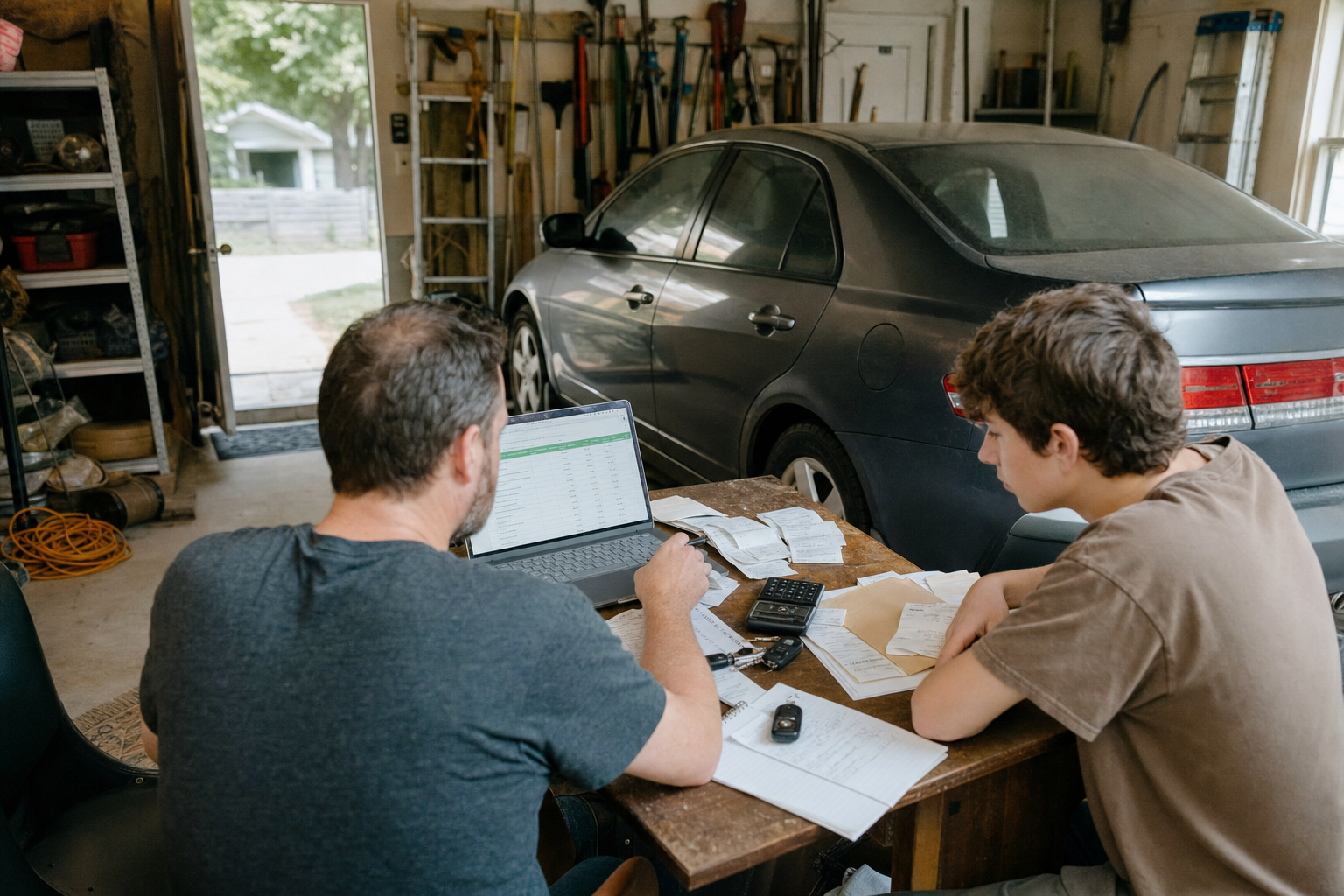
When you think about the cost of owning a car, the monthly loan or lease payment is usually the first number that comes to mind. But the total cost of car ownership includes much more than that single line item.
Depreciation, insurance, fuel, maintenance, repairs, taxes, registration, and financing all add up over time.
Some of these expenses arrive as monthly bills, while others—like depreciation—reduce your vehicle’s value without creating a payment reminder.
A realistic household budget should account for every category, not just the amount you send to the lender each month.
Understanding the full picture helps you plan, compare vehicles, and avoid surprises down the road.
Depreciation is an ownership cost that never shows up as a monthly bill.
Your vehicle loses resale value over time, and that decline is a real economic cost even if you plan to keep the car for years.
What makes up the total cost of car ownership
The total cost of car ownership combines acquisition-related expenses with the costs of operating and eventually disposing of the vehicle.
Each category contributes to the real amount you spend or lose over the ownership period.
Depreciation is the decline in your vehicle’s market value from the day you buy it until the day you sell or trade it.
Even if you never sell, the vehicle still loses potential resale value, and that loss is part of the economic cost.
Financing includes the interest you pay on a loan or the fees you pay under a lease.
The total interest depends on your loan amount, annual percentage rate, term, and down payment.
Insurance premiums vary based on multiple factors including location, coverage level, vehicle characteristics, and driver profile.
For information on auto insurance rating factors, consult the National Association of Insurance Commissioners consumer guide.
Fuel spending depends on how many miles you drive each year, your vehicle’s fuel economy, the type of fuel it uses, and local prices.
Electric vehicles replace fuel with electricity, and the calculation should reflect charging costs and energy consumption instead.
Maintenance and repairs are separate budgeting categories.
Maintenance typically covers scheduled preventive service—oil changes, filter replacements, fluid checks—based on your manufacturer’s recommendations.
Repairs address failures or damage that occur outside routine service intervals.
Tires are often tracked separately because they wear out on a predictable cycle and represent a significant periodic expense.
Taxes, registration, and fees include state and local sales or use taxes, title fees, registration renewals, licensing, and any inspection or emissions-testing charges.
These amounts vary by jurisdiction, so check your state motor-vehicle agency for current rates.
Visit the USA.gov state motor-vehicle services directory to find your state’s official agency.
Fixed costs versus variable costs
A practical household budget separates fixed costs from variable costs.
Fixed costs are generally less sensitive to how much you drive over a short budgeting period, while variable costs increase with mileage and usage.
Fixed costs typically include financing payments, insurance premiums, registration and licensing fees, taxes, and depreciation.
These expenses are generally less dependent on month-to-month driving behavior, though they can change over time due to policy renewals, rate adjustments, or market conditions.
Variable costs include fuel, maintenance, and tires.
The more you drive, the more you spend on fuel and the sooner you need service or replacement parts.
Understanding this distinction helps you identify which expenses you can control through driving behavior and which remain largely constant regardless of short-term mileage.
| Generally fixed costs | Typically variable costs |
|---|---|
| Financing (loan or lease payment) | Fuel or electricity |
| Insurance premium | Maintenance (oil, filters, fluids) |
| Registration and licensing | Tires (replacement cycle) |
| Taxes and fees | |
| Depreciation (economic cost) |
Why depreciation matters even if you keep the car
Depreciation is the loss in your vehicle’s value over time.
It happens whether you plan to sell the car next year or drive it for a decade.
If you buy a vehicle and later trade it in or sell it, the difference between what you paid and what you receive is the realized depreciation.
If you keep the car until it has little resale value, you have still experienced that economic loss—you simply chose not to recover any remaining value.
Depreciation should be counted as part of the total cost of car ownership because it represents money you cannot get back.
The amount depends on vehicle and market characteristics, so general cost averages will not predict your specific vehicle’s depreciation.
When you compare two vehicles using the same ownership period and assumptions, lower depreciation can reduce total ownership cost even when purchase price or monthly payment is higher.
How to calculate your own total
To estimate your own total cost of car ownership, start with the purchase-related expenses: the vehicle price, down payment, trade-in value, sales tax, title, and registration fees.
Then add the financing cost by calculating the total interest you will pay over the loan term.
Next, estimate your annual insurance premium by requesting quotes for the specific vehicle, coverage, and deductible you plan to use.
Contact your state insurance department if you need help understanding coverage requirements or comparing options.
For fuel, multiply your expected annual mileage by your vehicle’s fuel consumption rate and the current local fuel price.
If you drive an electric vehicle, use your electricity rate and the vehicle’s energy consumption instead.
Maintenance should follow the manufacturer’s recommended service schedule in your owner’s manual.
Add up the estimated cost of scheduled services for the ownership period you are planning.
Tires are harder to predict, but you can estimate tire replacement based on the expected tread life and your annual mileage.
For depreciation, research the typical resale value of your vehicle after the ownership period you expect.
Subtract that resale value from your purchase price to estimate depreciation.
Online valuation tools and historical resale data can help, but remember that condition, mileage, and market changes affect the actual result.
Add all categories together to get your total cost of ownership, then divide by the number of months you plan to own the vehicle to find your true monthly cost.
- Do you track all ownership categories, or only the monthly payment and insurance?
- Have you checked your state motor-vehicle agency for current registration and tax rates?
- Does your budget include a reserve for unexpected repairs and tire replacement?
- If you are comparing vehicles, are you using the same ownership period and mileage assumption for each?
Understanding the total cost of car ownership gives you a complete picture of what a vehicle will actually cost your household.
It helps you compare options, plan your budget, and avoid underestimating the real expense.
When you account for depreciation, insurance, fuel, maintenance, repairs, taxes, and financing together, you can make a more informed decision and set aside the right amount each month to cover every category.
* Ownership costs vary by vehicle, location, mileage, and individual circumstances. For federal cost data and category definitions, visit the U.S. Bureau of Transportation Statistics.