
Inflation and your household budget: what to review first
Start with actual spending, prioritize essentials, then review discretionary costs.
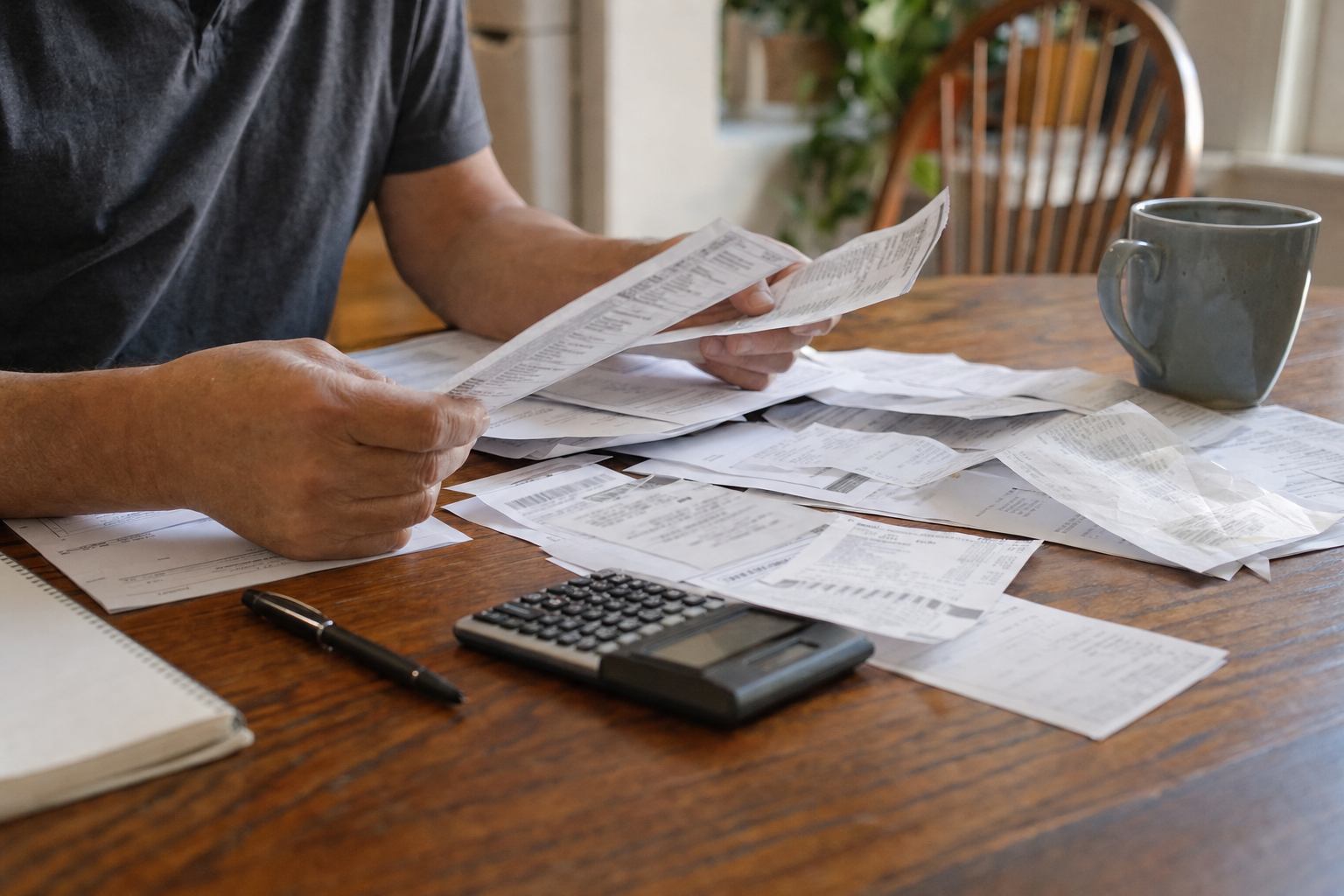
When prices rise, your inflation household budget can lose effectiveness even if your spending habits stay the same.
The same income buys less, and categories you thought were under control may quietly expand.
The first step is not cutting randomly.
It is comparing what you actually earn and spend right now, then identifying which parts of your budget feel the most pressure.
This review works best when you separate essential expenses from optional ones and look at both small recurring charges and large fixed costs.
Protecting required payments comes before reducing savings, and understanding your household’s specific spending pattern matters more than any headline inflation number.
Review what you actually spend, not just what you planned to spend.
A budget based on outdated assumptions will not show where inflation is hitting your household hardest. Use real transaction data to see the current picture.
Start with your actual income and spending
Begin by listing your current take-home income from all sources.
Then gather your actual spending for the past few weeks or months—bank statements, credit card records, and cash purchases all count.
Compare the two totals.
If spending exceeds income, you have a gap that needs attention.
If income still covers spending, you may still find categories where costs have grown faster than expected.
Reviewing a longer period can help you spot patterns and account for irregular bills, seasonal costs, and one-time purchases that a single month might not show.
This step is not about judgment.
It is about accuracy.
You cannot adjust a budget you do not measure.
Identify which essential categories increased most
Many households treat certain expenses as essential—examples include housing, groceries, transportation, utilities, insurance, health care, and required debt payments.
Review each category to see where costs have risen.
Some increases come from higher prices.
Others come from higher usage or a change in what you buy.
Separating the two helps you decide what to adjust.
For example, a larger grocery bill might reflect higher food prices, more meals at home, different products, or a combination.
Knowing the cause shapes the response.
Transportation costs can include fuel, maintenance, insurance, loan or lease payments, tolls, and parking.
Each piece may move at a different rate.
Utilities and insurance premiums can vary by provider, plan, and location.
Contact your providers to confirm current charges and ask about available discounts or payment plans.
Protect essential bills and minimum debt payments first
Once you know which essential categories cost more, prioritize keeping those bills current.
Housing, utilities, insurance, health care, and minimum debt payments generally come before discretionary spending.
Missing a payment can lead to consequences that vary by contract, account type, and provider—including late fees for some accounts, service interruptions for utilities, and potential impact on your credit history.
Protecting these obligations preserves stability.
If income does not cover all essentials, contact providers before missing a payment.
Some offer hardship programs, payment arrangements, or temporary relief options that are easier to access before an account becomes past due; check with each specific provider to see what may be available.
Debt payments deserve careful review.
Minimum payments must be met to avoid default, but extra payments toward principal can sometimes be paused temporarily while you stabilize other categories.
Review discretionary spending and recurring subscriptions
After essential costs are secure, examine discretionary spending.
This includes dining out, entertainment, hobbies, non-essential shopping, and subscription services.
Recurring subscriptions are easy to overlook because they charge automatically.
Review streaming services, apps, memberships, software, and any other monthly or annual charges.
Cancel what you do not use or need right now.
Look for the spending categories that consume the largest share of your budget, since adjustments there can create more flexibility.
A single insurance policy review or phone plan change may affect your budget more than many smaller cuts combined.
Look for substitutions that preserve value.
Switching brands, buying in bulk, cooking more at home, or choosing a lower-cost service tier can reduce spending without eliminating the category entirely.
Reassess savings and investment contributions last
Emergency savings and retirement contributions are important, but they should be reviewed after you have addressed essential bills and high-cost discretionary spending.
If you have an employer retirement match, try to preserve at least enough contribution to capture the full match.
Matching contributions may be subject to vesting schedules that require you to work for a certain period before the employer contributions become fully yours, so review your plan documents or contact your plan administrator for details. (Source: U.S. Department of Labor)
Emergency fund goals may need temporary adjustment if income has not kept pace with essential costs.
Reducing the monthly contribution is generally better than stopping it entirely or using credit to cover the gap.
Long-term investment contributions can sometimes be paused or reduced for a defined period while you stabilize the household budget.
Document the plan and set a date to revisit the decision.
| Review order | Category |
|---|---|
| First | Actual income vs. actual spending |
| Second | Essential expenses (housing, groceries, transport, utilities, insurance, health, debt) |
| Third | Discretionary spending and recurring subscriptions |
| Last | Savings and investment contributions |
Adjusting a household budget during inflation is not a one-time task.
Prices, income, and household needs can all shift, so plan to review your budget regularly.
Start with the categories that matter most to your household.
Protect essential obligations, reduce optional costs where you can, and preserve financial flexibility for the future.
The goal is not perfection.
It is a budget that reflects your current reality and supports the stability you need.
* Prices, income, and household circumstances change over time. For current inflation data, visit the Bureau of Labor Statistics Consumer Price Index page. For budgeting tools and guidance, visit the Consumer Financial Protection Bureau.