
Rental car coverage: when your policy, card or counter protects you
Four sources can cover a rental—but gaps are common if you don't check first.
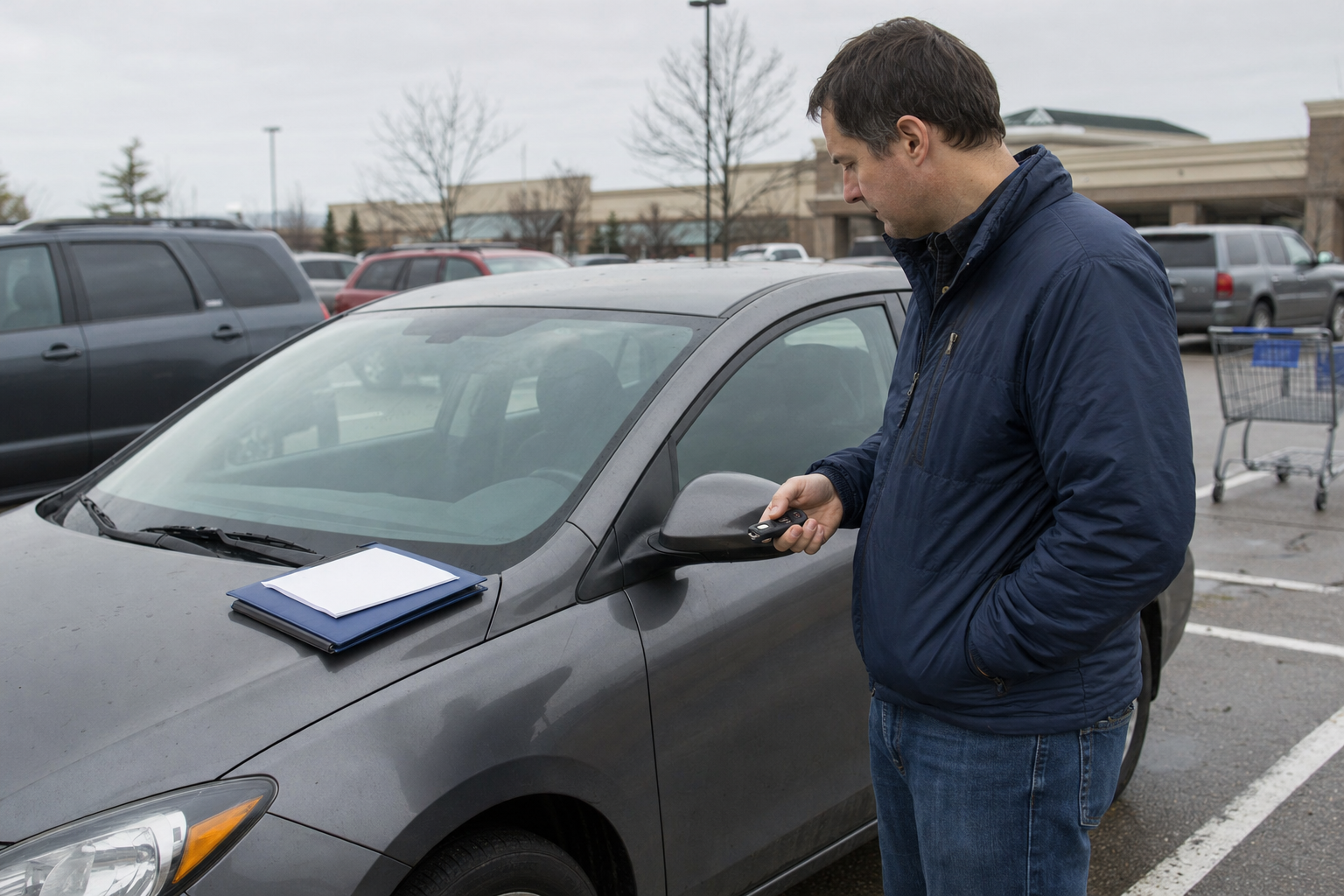
When you pick up a rental car, the agent at the counter will ask whether you want rental car insurance coverage.
Before you answer, you need to know what protection you already have.
In the United States, rental car insurance coverage may come from your personal auto policy, a credit card benefit, the rental company itself, or a separate travel policy.
Most drivers have some rental car insurance coverage—but not always enough.
Your personal policy may extend liability and collision protection to a rental, but your deductible, limits, and exclusions still apply. Credit cards often add a layer of damage protection, but they rarely cover liability or injuries. Understanding which gaps remain is the key to deciding what, if anything, to buy at the counter.
When your personal auto policy covers a rental
Whether your personal auto insurance extends to a rental depends on your specific policy, insurer, state, rental location, vehicle type, and rental purpose.
Coverage terms, limits, deductibles, and territorial boundaries vary by policy.
Some personal policies extend liability, collision, and comprehensive coverage to temporary rentals used for personal purposes, while others may exclude certain rentals or destinations.
Liability coverage addresses injuries or property damage you cause to others.
Collision and comprehensive coverage address damage to the rental vehicle itself.
Your policy’s exclusions remain in force, so if your policy excludes certain vehicle types, business use, or drivers not listed on your policy, those exclusions apply to the rental as well.
How credit card rental protection works
Many credit cards offer some form of rental car insurance coverage as a cardholder benefit.
Whether the benefit is primary or secondary—and what it covers—varies by card issuer and specific card product.
Credit card coverage commonly focuses on damage or theft of the rental vehicle.
Terms may include exclusions or conditions, and the scope of protection depends on the specific card.
Activation requirements, such as whether you must pay for the rental with the card or decline certain rental-company products, vary by issuer.
The benefit terms, exclusions, vehicle limits, and claim procedures vary substantially by issuer and card.
Generic claims that any major credit card automatically provides full coverage should not be relied upon.
What the rental counter offers
Rental companies in the United States offer optional protection products at the counter.
These products address different risks and should not be treated as interchangeable.
A collision damage waiver or loss damage waiver is generally a contractual agreement in which the rental company waives your financial responsibility for specified vehicle damage or loss.
Exclusions and conditions in the rental agreement still apply.
Supplemental liability coverage, personal accident insurance, and personal effects coverage address other exposures that your personal policy or credit card may not cover.
| Product | What it addresses |
|---|---|
| Collision/Loss Damage Waiver | Damage, theft, or loss of the rental vehicle |
| Supplemental Liability | Injuries or property damage caused to others |
| Personal Accident Insurance | Medical expenses or death benefits for the renter and passengers |
| Personal Effects Coverage | Theft or damage to personal belongings in the rental |
Enterprise confirms that its Damage Waiver is optional and not required for rentals when customers have other coverage.
Declining protection can leave gaps if your other coverage is insufficient or does not apply.
Coverage gaps that catch renters
Even when you have personal auto insurance and a credit card benefit, certain situations commonly create coverage gaps.
Your personal auto policy’s territorial limits depend on your specific policy and insurer; confirm where your coverage applies before you rent abroad.
International renters should verify territorial limits and consider the rental company’s protection or a specialized travel policy.
Whether your personal auto policy covers business rentals depends on your policy terms and your employer’s insurance arrangements.
Coverage can depend on whether the rental is for personal or business use and on the employer’s insurance arrangements.
If you do not have a personal auto policy, verify what protection options are available and what each product covers before you rent.
Deciding what protection you need
The decision to buy rental car insurance coverage at the counter depends on your existing protection, the rental agreement’s terms, and the risks you are willing to accept.
Compare your personal policy’s deductible, limits, and exclusions with the rental company’s waiver and supplemental products.
Consider the rental agreement’s treatment of loss of use, administrative costs, towing, and diminished value.
Your personal policy or credit card may not cover these charges.
Ask yourself these questions:
- Does my personal policy cover rentals in this location and for this purpose?
- Will my deductible apply if the rental is damaged?
- Does my credit card benefit cover liability, or only vehicle damage?
- Am I renting a vehicle type that my policy or card excludes?
- Is this rental for business use, and does my employer’s policy apply?
- Am I traveling outside the United States or Canada?
If the answer to any of these questions reveals a gap, evaluate whether the rental company’s protection or another product fills that gap at an acceptable cost.
Verify coverage with your insurer, card issuer, and the rental company before you travel.
There is no one-size-fits-all answer.
Rental car insurance coverage depends on your policy, your card, the rental agreement, and the trip itself.
* Coverage terms, limits, exclusions, and product availability can change. Confirm current details with your insurer, card issuer, rental company, and state insurance department before making a decision.