
Simple Interest Car Loan: How Each Payment Is Split
Understand how your payment divides between interest and principal over time.
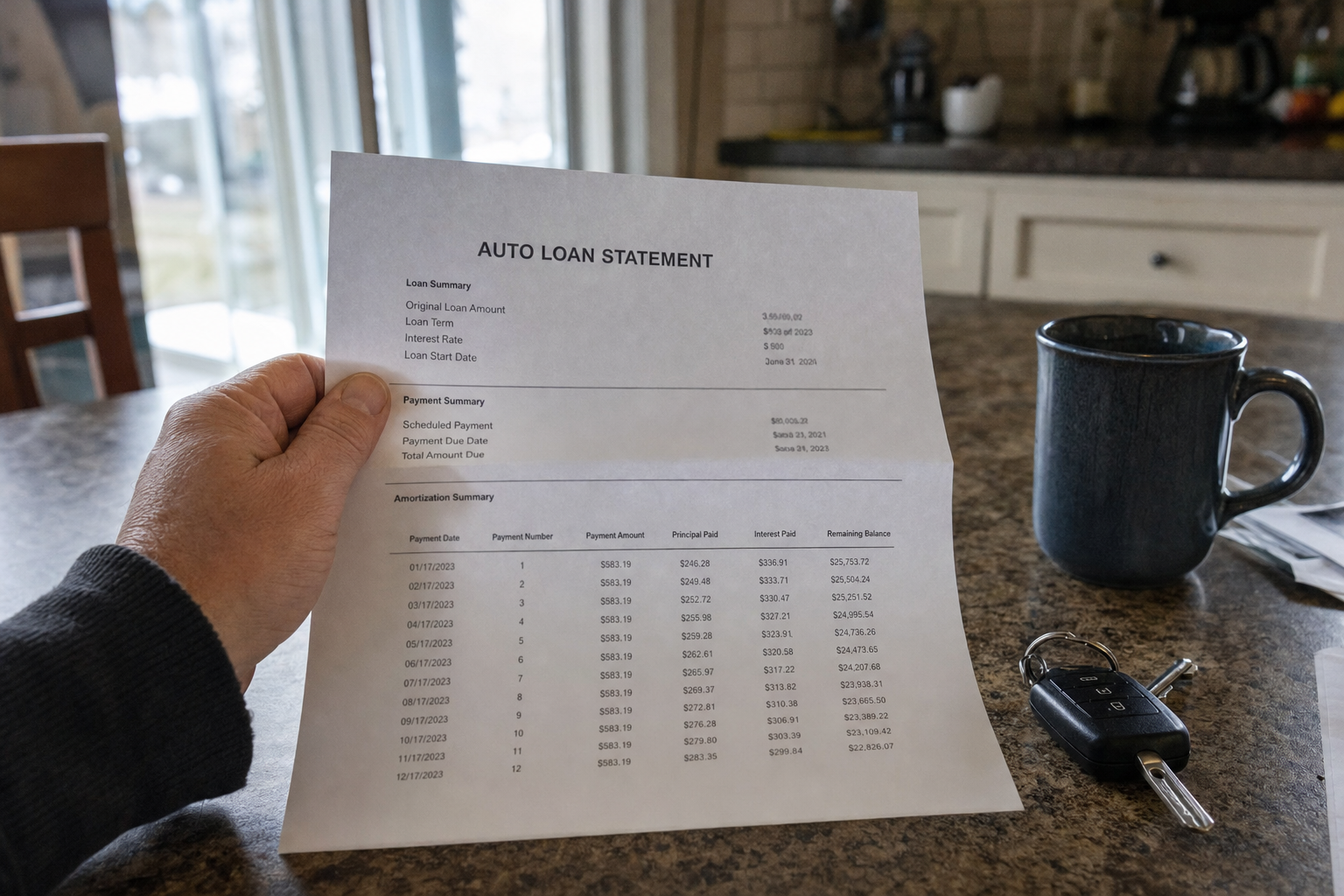
A simple interest car loan calculates interest on the unpaid principal balance.
The Consumer Financial Protection Bureau describes simple interest as commonly calculated on the outstanding balance daily or monthly, depending on the loan agreement.
Each payment you make generally covers the interest that has built up since your last payment, along with any applicable fees, and the rest reduces the principal, subject to the loan agreement and applicable law.
Because interest accrues between payment dates on many simple interest loans, the portion going to interest can change if you pay early, late, or on an irregular schedule, even when your scheduled payment amount stays the same.
Understanding how each payment is split helps you see where your money goes and how paying extra or paying on time can save you interest over the life of the loan.
Interest is charged only on the balance you still owe.
Unlike precomputed interest loans, a simple interest car loan does not charge interest on accumulated interest, so the daily charge shrinks as you pay down principal.
How interest accrues on a simple interest car loan
Lenders calculate interest on the outstanding balance using your annual interest rate and the time since your last payment.
The calculation method and the day-count basis vary by lender and are set out in your contract.
Check your loan agreement to confirm how your lender counts days and calculates the interest charge.
Because interest builds over time on many simple interest loans, the amount of interest included in your next payment depends on how many days pass between payments and how much principal you still owe.
How each payment is split between interest and principal
When you make a payment, the lender generally applies the money first to any outstanding fees, then to accrued interest, and finally to your principal balance, subject to the loan agreement and applicable law.
Whatever remains after covering fees and interest goes toward reducing your principal, subject to any charges outlined in your contract.
On typical fixed-payment amortizing simple interest loans, early in the loan your principal balance is higher, so more of each payment covers interest.
Later in the loan, your balance is lower, so less interest accrues and a larger share of each payment may reduce principal.
| Loan stage | Interest portion | Principal portion |
|---|---|---|
| Early payments | Larger | Smaller |
| Later payments | Smaller | Larger |
Why the split changes over the life of the loan
The interest charge on simple interest loans is based on your remaining principal, so a higher balance generates more interest.
In the first months of the loan, you owe the full amount you financed, and the interest charge is at its highest.
As you make payments and reduce the balance, the interest charge decreases, leaving more of each payment available to pay down principal.
This pattern typically continues throughout the loan, with the final payments usually containing a larger principal share because very little interest accrues on a small remaining balance.
How payment timing affects the split
On simple interest loans that calculate interest daily, the number of days between payments directly affects how much interest you owe.
Paying a few days early may reduce the interest that has built up since your last payment when the contract uses daily simple interest and the lender credits the payment promptly, leaving more of your payment to reduce principal, depending on your lender’s posting and allocation rules.
On loans that accrue interest daily, paying late allows more days of interest to accumulate, so a larger portion of your payment covers interest and less goes toward principal.
Late payments may also trigger fees or other consequences as outlined in your contract.
Extra payments and principal-only options
On eligible simple interest loans where extra funds are applied to principal under the contract, making extra payments can reduce your principal faster and lower the total interest you pay over the life of the loan.
Some lenders may allow you to request that more of your payment be applied to principal, subject to the loan documents and the servicer’s instructions.
Other lenders may apply extra money to accrued interest or fees before applying the remainder to principal, so it is important to confirm your lender’s process.
Check your contract or contact your servicer to find out how to request that more of your payment be applied to principal and whether any special instructions or forms are required.
How to check your payment split
Your lender or servicer may provide monthly statements or other account records that show how each payment was allocated.
Review available account documents to see the amounts applied to interest, principal, and any fees.
Compare the allocation with the terms in your loan contract and the lender’s servicing disclosures to confirm the split matches the agreed calculation method.
If the numbers do not match your expectations or if you have questions about how a payment was applied, contact your servicer for an explanation.
- Check available statements or account records for the interest and principal breakdown.
- Confirm the calculation method and day-count basis described in your contract.
- Note the number of days between payments if your schedule varies.
- Ask your servicer how extra payments are applied.
- Keep records of account statements and payment history.
Knowing how your payment is split gives you a clearer picture of your loan progress.
It also helps you decide whether paying extra or paying early makes sense for your budget and financial goals.
Review your contract and account statements regularly, and reach out to your lender if anything is unclear.
* Payment allocation methods and contract terms can vary by lender. Confirm the details in your loan agreement and contact your servicer with questions. For general information on auto financing, visit the Consumer Financial Protection Bureau.